Projector Screen Fabric
If you want the best contrast between colors, you should upgrade to a pearlescent fabric. Pearlescent projector screen fabric is the preferred choice of material for most movie theatre companies. In a dark viewing environment (ideal), this type of fabric yields a much richer picture. However, it may be necessary to use this type of fabric when you have brighter, higher ambient conditions, or if you are using a lower output projector, as it has a slightly higher reflectivity than the basic matte white fabric, about fifteen percent. The only drawback to this type of material is that it has a lower viewing angle capacity than the basic matte white fabric, about thirty five degrees on average but some higher quality models can have a forty five degree capacity. This lower viewing angle range is a result of it’s higher reflectivity properties. This fabric costs more, about six dollars to eight dollars per square foot.
The recent developments in movie making technologies have allowed audiences to view a fast increasing number of movies in 3D in theatres and surprisingly at home. With that, there has been a surge in the demand for silver matte fabric, the primary material used for a polarized 3D projection. This material has high reflectivity, about thirty percent, producing a very bright image and rejecting lots of ambient light. When the audience wears special glasses that filter out portions of this reflected light, 3D images are perceived. As this technology becomes more advanced and becomes more affordable, the 3D movie experience we will not be surprised if the 3D movie experience becomes the preferred viewing choice for the majority of people. There is a drawback to using this material, however. That is, viewing angle capacities are greatly reduced to get the best possible picture, about twenty five to thirty degrees on average. The cost of this projector screen fabric will range between ten and fifteen dollars per square foot on average.
Glass beaded projector screen fabric is a specialty fabric that produces the most brilliance as it is the most reflective material aside from a mirror, reflecting about forty percent of light. However, since it has such a narrow viewing angle, twenty to twenty five percent on average, it is really only recommended for home use or for special situations, such as when you have a viewing area that is a dark, long, and narrow hall. Since this fabric has such a high gain and high reflectivity, you must set the projector and screen at audience level to get a clear picture, while making sure that there isn’t anyone or anything in the way of the line of projection. The picture produced from this type of fabric can be too bright for some viewers, as dark colors are usually perceived as their lighter counterparts, black turned to gray for example. Glass beaded projector screen fabric is fragile and sensitive to staining. Even with proper upkeep, it can and often will develop heat spots over time, so be prepared to replace it frequently. Expect to pay a premium for this type of fabric, about twenty to twenty five dollars per square foot.
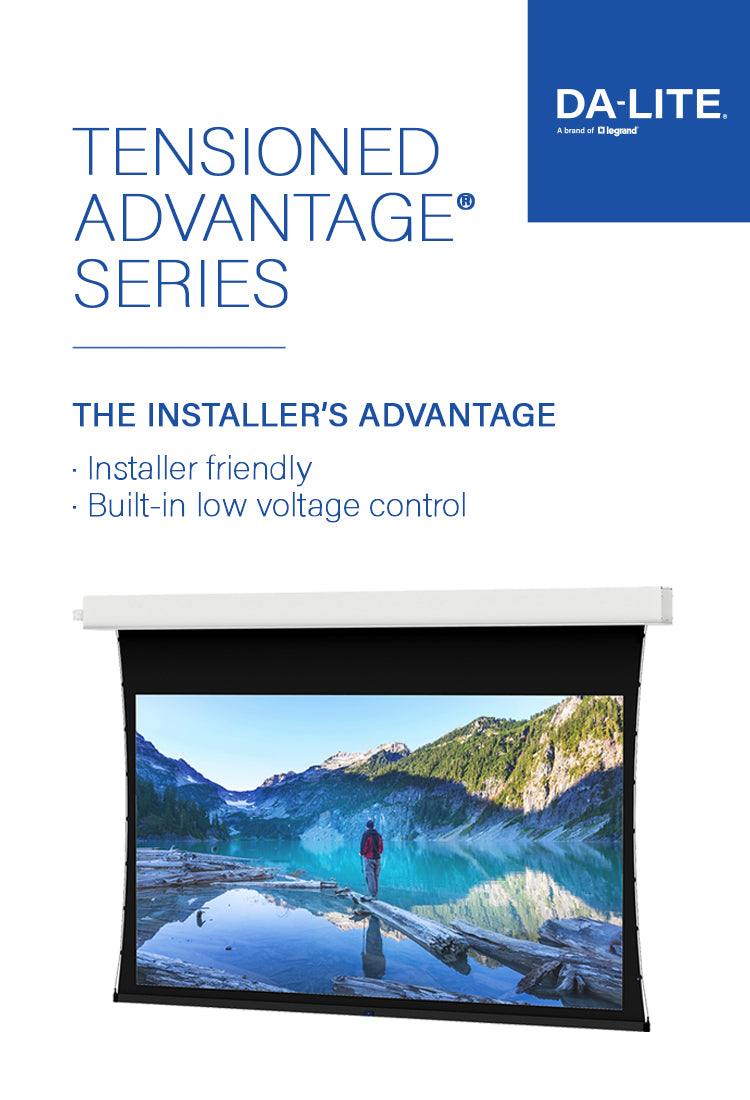
If you are looking for a good, versatile fabric, one model that a lot of customers are quite happy with is the Da-Lite Matte White fabric. This vinyl based material is flexible, yet sturdy and durable. In locations where there is a lot of humidity and moisture in the air, it will resist mildew build up. Conversely, it is flame retardant so it can withstand places that experience lots of heat. Plus, this fabric is very easy to clean so maintaining the fabric should not pose too much trouble. You and your viewing audience will enjoy high quality picture because this material helps reduce shifts in hue, which contributes to rich colors. With a plus and minus fifty degree off center viewing capacity, this material will provide plenty of vantage points. Also, a moderate 1.1 gain allows you to be more flexible in where you position your projector, as the projector light will reflect more evenly across the room. The typical cost of this model is about five dollars per square feet.
It is highly recommended that you place your projector screen fabric in front of a sound system if you want the best possible viewing experience. For this reason, projector screen fabrics will often come with several tiny perforations in the material. They exist to create acoustic transparency between the fabric and the sound system, which makes the sound and viewing more life-like.
No matter what size you plan to make your projection screen, it is recommended that you order a little extra fabric to ensure proper installation, as you will need to support your fabric, such as on a frame. It is recommended that you add at least six inches to the intended width and height dimensions of your projection screen.
The ideal dimensions of your projector screen depends on a number of factors, from your projector output to how far you typically will sit from your screen, to your visual acuity. However, in an effort to make it as easy as possible to determine how much fabric to order, we have provided a few quick guidelines below.
1. In inches, determine the furthest distance that you plan to sit from your projection surface and divide that number by five. The answer to this will be the shortest width that your projector screen should be. For example, if the furthest distance that you plan to be from your projector screen is 25 feet, that is 300 inches. So the width the your projector screen should be 60 inches.
2. Determine the ideal length (height) of your projector screen by multiplying the width by .75 to meet 4:3 screen ratio standards or .5625 to meet 16:9 screen ratio standards. So, continuing our example on step 1, the length of our projector screen should be 45 inches or 33.75 inches, depending on the ratio which your prefer.
Using the above example, we have determined that our projection area will be 60″ x 45″ or 60″ x 33.75″. Since it is recommended that you order at least six inches of extra fabric for each side, you should order your fabric dimensions in 72″ x 57″ or 72″ x 45.75″.
When building your own projection area you can instruct the projector screen fabric company to cut the material to your specifications. This will save you lots of time and ensure that the job is done right, as many companies will not accept returns.
Other interesting posts:
Outdoor Projector Screen Fabric
Projector Screen Fabric Cleaning And Maintenance